
ExpressTest: Building a High-Stakes COVID-19 Testing Platform at Pandemic Pace
Outcome
A complex Umbraco platform built at pandemic pace, scaled to support one of the UK's largest private COVID-19 testing operations. The system integrated with NHS Digital for results delivery via QR code, supported "Fit to Fly" certification at international scale, and continued operating beyond the acute pandemic phase as Cignpost pivoted into broader preventative health screening.
Client
Cignpost Diagnostics, operator of the ExpressTest service, became the UK's largest private COVID-19 testing provider during the pandemic. The work was delivered through Absurd as part of a thirty-person specialist team across service design, product design, engineering, QA, and delivery.
The brief
The pandemic compressed years of digital service delivery into months, in a market defined by shifting regulation and customers who needed clarity, speed, and confidence in equal measure. Cignpost engaged Absurd to design, build, and scale the entire service ecosystem behind ExpressTest. Not just a booking site, but testing centre operations, laboratory workflows, regulatory reporting, business intelligence, customer communications, and a VIP service. All built on Umbraco Commerce and Microsoft Azure, connected through integrations with NHS Digital, Salesforce, LIMS, DHSC, Xero, and Power BI.
The strategic ambition was clear. The operational reality was harder. The work had to ship at speed (a Thursday government announcement could require new journeys deployed by Monday morning), adapt as regulations evolved weekly, and remain simple enough for millions of customers to use under pressure.
Strategic considerations
Three tensions shaped every decision:
Building at regulatory pace within a thirty-person team moving fast. Government policy changed weekly, sometimes more often. The platform had to absorb every change without rebuilds. With multiple workstreams moving in parallel, the upstream content modelling and editor configuration had to do the work that engineering tickets normally would.
Distressed purchase customer experience. Customers weren't browsing. They needed confidence, clarity, and speed during a moment of personal uncertainty: international travel, employment requirements, family health. The site had to be a calm trusted resource and a fast booking funnel in the same flow, without compromising either.
Editor-led content velocity inside an engineering team that couldn't slow down. With protocols shifting weekly, the content layer couldn't bottleneck delivery. The visual editor configuration and content modelling had to be designed for change from day one. Get the structure right early and content keeps pace with the world; get it wrong and every protocol shift becomes an engineering ticket.
Approach
The work wasn't separable into clean layers. Content depended on the visual editor; the visual editor depended on the data model; the data model depended on engineering decisions being made at the same time. My contribution sat across content, content structures, design, front-end delivery, eCommerce, and UX writing. The work was on-site at Cignpost throughout, with direct collaboration across the design, development, and eCommerce teams, and cross-working with the back-end team to keep their decisions reflected in design and content.
Content modelling and dynamic pricing structures. Structured content for multiple test types (PCR, antigen, lateral flow), dynamic pricing logic across locations and timing, certification options, corporate accounts, and the VIP service. Modelling discipline upstream is what lets the visual editor be used by non-technical editors without breaking the system.
UX writing across the booking funnel. Microcopy, error states, certification messaging, and the calm-clarity language a distressed-purchase customer needs at every step. UX writing in this context is content strategy translated into the smallest, highest-stakes unit of customer experience.
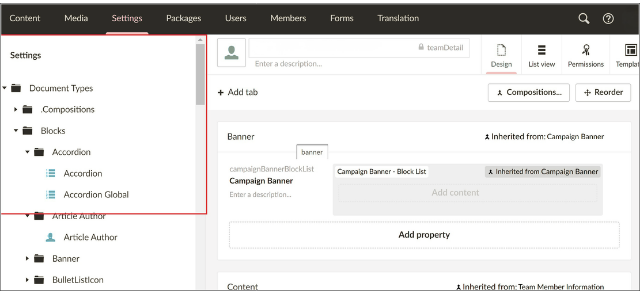
Visual editor as content infrastructure. Setting up Umbraco Commerce's visual editor so content updates kept pace with shifting public health guidance, without engineering bottleneck. The editor configuration is one of the most undervalued layers of CMS work; done well it disappears, done poorly it becomes the thing that breaks first.
Front-end delivery, eCommerce, and conversion optimisation. Working directly with the design, development, and eCommerce teams on page builds, content categorisation, and a booking experience designed for conversion under pressure, with trust signals inside the flow rather than adjacent to it.
Cross-layer working with engineering. Holding content and design integrity inside a back-end team moving fast. Ensuring back-end decisions flowed into the design and content layers. QA at engineering pace; UAT with the Cignpost team. The connective work across layers is where senior content strategy practice actually lives on a composable platform.
Impact
Per Absurd's published case study, the full engagement supported more than £400m in revenue in 12 months, 30+ testing centres, and made ExpressTest a Top 3 DHSC-approved provider.
Within that engagement, the platform:
Served Heathrow, Gatwick, and other major airport testing partners.
Served the BBC, Netflix, the Mercedes F1 team, the DP World Tour, and other major corporates and elite sports organisations.
Supported "Fit to Fly" certification for international travel at scale.
Integrated with NHS Digital for results delivery via QR code.
Absorbed continuous Government guidance and protocol shifts in real time without rebuilds.
Continued operating beyond the acute pandemic phase. Cignpost pivoted to broader preventative health screening (cardiovascular risk, cancer screening, body composition) using the same diagnostic capability and digital infrastructure.
What made the platform last wasn't its initial scope. It was the structural discipline applied upstream: content modelling and editor configuration designed for change, not retrofitted later.
What it taught me
Content infrastructure built at pace under pressure isn't disposable infrastructure. The same Umbraco platform built for COVID testing now powers Cignpost's broader preventative health business: same content model, same editor configuration, different business case entirely.
The discipline this engagement taught me, and that I bring to every CMS programme since, is that pace doesn't excuse a lack of structural discipline. Pace reveals whether the discipline was real. An emergency build is a stress test for upstream content strategy decisions; the platform either holds and adapts, or it has to be rebuilt. ExpressTest held, kept absorbing the protocol shifts, and then absorbed an entirely different business model. That outcome was decided in the content modelling, not in the launch.